

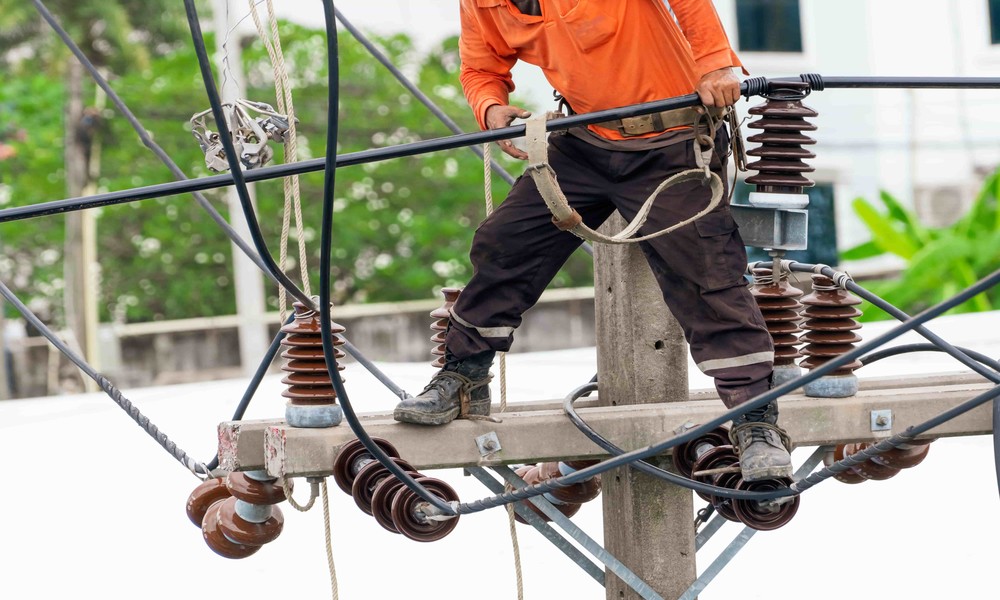
If there’s one thing we know in Texas, it’s that the weather doesn’t care about your schedule. Whether it’s a blue norther whipping through the Panhandle or a tropical system brewing off the Gulf, when the power goes out, the work begins. As of 2026, Texas officially holds the title for the most linemen in the country, and for good reason-our grid is a beast that never sleeps.
But being a lineman today looks a lot different than it did even ten years ago. We’re not just “climbing monkeys” anymore; we’re technicians working on an increasingly complex, smart grid. While the stakes remain just as high, the lineman climbing gear we rely on has undergone a serious high-tech makeover. Let’s talk about the gear that’s keeping us alive in a world where 90% of the lines we touch aren’t even insulated.
The Foundation: Why Your Boots are Smart Now
You might think a boot is just leather and rubber, but in 2026, Safety Boots are practically wearable computers. We’ve moved beyond just worrying about a nail through the sole. Today’s Electrical Hazard free boots are engineered to handle “step potential”-the voltage difference between your feet when you’re standing near a grounded fault.
The modern lineman pole climbing boots we’re seeing in the yards now often feature moisture-wicking membranes that don’t just keep your feet dry from rain; they regulate temperature to prevent heatstroke, a major concern for us during those 100-degree August afternoons. But the heart of the boot remains the same: a Rubber sole with a massive EH rating and a lineman boot with steel shank reinforcement.
Why the steel? Because even with all the smart tech in the world, physics hasn’t changed. When you’re standing on a 1-inch stirrup for six hours, you need that rigid steel spine to prevent foot fatigue. Without it, your arches would give out before the lunch break, and a tired lineman is a dangerous lineman.
Beyond the Belt: The New Era of Fall Protection
If you haven’t upgraded your climbing belt recently, you’re living in the stone age. The 2026 standard for Lineman Climbing Gear has moved toward integrated systems that communicate with your crew. Some of the newer belts actually have sensors that can detect a “cut-out” or a sudden drop, automatically alerting the ground crew or emergency services if a fall occurs.
But even the fanciest belt is only as good as the hands using it. A lineman’s daily life is a constant juggle of specialized tools. You’ve got your:
- Insulated Kleins: Still the go-to for cutting and gripping.
- Skinning Knives: Now often featuring ergonomic grips to prevent carpal tunnel during long shifts.
- Battery-Powered Impact Wrenches: These have largely replaced the old hand-crank speed wrenches, saving our elbows and shoulders from years of repetitive strain.
When you’re reaching for these tools at 40 feet, your climbing boots and belt work together like a tripod, giving you the stability to use both hands without feeling like you’re about to take a dive.
The Invisible Threat: Step and Touch Potential
Did you know that in 2026, overhead power line contact remains the leading cause of fatalities in our industry? It’s not always a direct touch, either. Electricity is lazy-it wants the easiest path to the ground, and it will jump through the air (arc) or travel through the soil to find it.
This is why Electrical Hazard free boots are non-negotiable. Your boots are literally the last line of defense against “touch potential.” If you touch an energized truck or a fence while standing on the ground, those boots are what keep the circuit from completing through your heart. We’ve seen studies showing that as the grid gets more crowded with “distributed energy” like home solar and wind, the risk of back-feeding lines has skyrocketed. You can’t just trust that a line is dead because the breaker is pulled; you have to trust your gear.
Grounding: The Lineman’s Safety Blanket
We’ve talked about boots and belts, but we can’t talk about lineman equipment without mentioning grounding sets. In 2026, we’re using “Equal Potential Grounding” more than ever. This means we bond everything together-the line, the pole, and even a “grounding mat” we stand on.
Think of it like being a bird on a wire. If everything you touch is at the same voltage, no current flows through you. Your lineman climbing boots work in tandem with these grounding mats to ensure that even if the line becomes hot, you’re sitting in a safe “bubble” of zero potential.
Texas Tough: Relatable Stats for the Yard
Being a lineman in the Lone Star State isn’t just a job; it’s a brotherhood. With over 120,000 of us nationwide and Texas leading the pack, we’re the ones people call when the AC dies. Statistics show that the average lineman travels over 60,000 miles a year for storm recovery. That’s a lot of walking, a lot of climbing, and a lot of wear and tear on your lineman climbing boots.
We’re also seeing more women entering the trade-about 6,250 female line workers are hitting the poles in 2026. This has pushed manufacturers to finally design Safety Boots and harnesses that actually fit a woman’s frame, improving safety for everyone on the crew.
Conclusion: Coming Home Safe
At the end of the shift, all the keywords and high-tech specs don’t mean a thing if you don’t make it back to your family. Whether it’s the lineman boots with steel shank keeping your feet steady or the climbing boots that protect you from an 18,000-volt arc, your gear is your life.
Don’t be the guy who tries to get one more month out of a cracked Rubber sole. Stay sharp, check your grounds, and remember: in this business, there are no “small” mistakes. Stay safe out there, Texas.
FAQs
1. What is the difference between “Anti-Static” and “EH-Rated” boots?
Huge difference! Anti-static boots are designed to dissipate static to prevent sparks. Electrical Hazard (EH) boots are designed to resist current flow to protect you from electrocution. Never swap one for the other in a power environment.
2. Why do I need a 16-inch shaft on my lineman climbing boots?
It’s all about the gaffs. The long shaft protects your legs from the pressure and friction of the climbing irons’ straps. A shorter boot can lead to “shin splints” and bruising after a long day on the wood.
3. Do modern composite toes protect as well as steel toes?
Yes! In fact, many linemen prefer composite toes because they don’t conduct heat or cold as much as steel, and they are non-conductive, offering an extra layer of “what-if” protection in electrical environments.
4. How do I know if my rubber soles are still safe?
Clean them daily. If you see deep cracks, embedded metal shavings, or if the tread is worn flat, they are no longer providing the rated protection. When in doubt, swap them out.
5. Is a climbing belt enough for fall protection in 2026?
Most companies now require a “100% fall protection” system, which often includes a secondary lanyard or a specialized “BuckSqueeze” style device that keeps you attached to the pole even if you “cut out.” Check your local safety manual!