

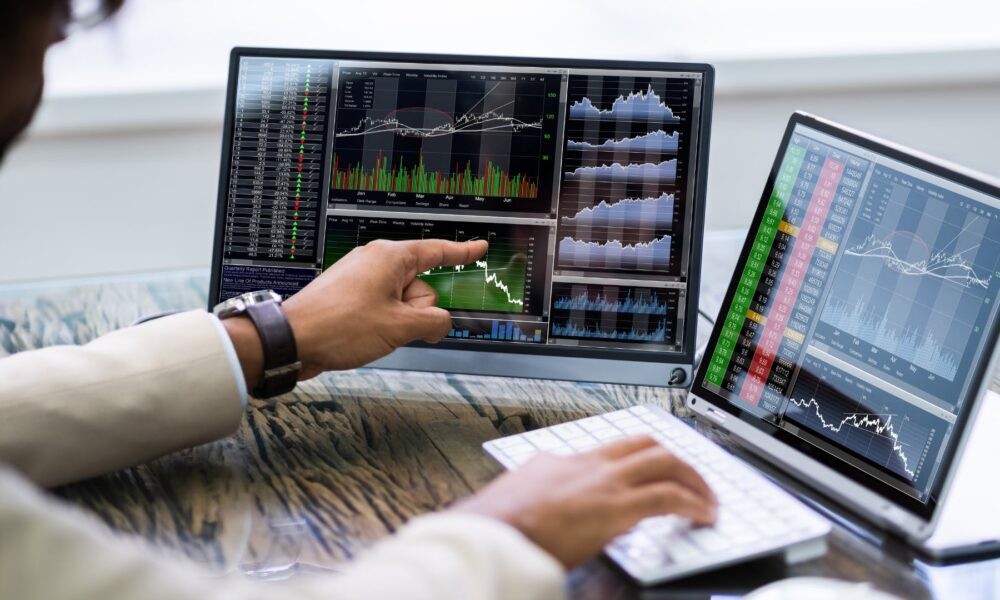
Trading stocks online has become a regular part of equity market participation for many investors. With mobile apps and web platforms, users can buy and sell shares, track market prices, review portfolio value, and manage orders without depending on offline processes. This digital access has made stock market activity faster and more convenient.
However, convenience should always come with security and discipline. Since online trading involves money, personal details, and securities, users must choose platforms that offer safe login, reliable execution, transparent charges, and clear account tracking. A smooth online trading experience is not only about speed. It is also about safety, clarity, and control.
What Does It Mean to Trade Stocks Online?
To trade stocks online means buying and selling listed shares through a digital platform. Investors use a trading account to place orders and a Demat account to hold shares electronically. These accounts are usually linked with a bank account for fund transfers.
Once the account is active, users can search for stocks, check prices, place buy or sell orders, and track order status. Many platforms also provide watchlists, charts, market news, portfolio reports, and research tools.
Online trading can be used for delivery-based investing or short-term trading. Delivery trading means buying shares and holding them beyond the same trading day. Short-term trading may involve buying and selling within a shorter period, including intraday activity.
Why Secure Mobile Features Matter
Security is important because trading apps handle sensitive financial information. If an account is not protected properly, there may be risks related to unauthorized access, wrong transactions, or misuse of personal data.
A secure trading platform should protect user login, order placement, fund transfers, and account activity. Investors should also follow safe digital habits while using the app. Even a good platform can become risky if users share passwords, OTPs, or transaction PINs with others.
Key Security Features in an Online Trading App
Two-Factor Authentication
Two-factor authentication adds an extra layer of security during login. Apart from the password, users may need an OTP, PIN, biometric approval, or device confirmation. This helps reduce unauthorized access.
Biometric Login
Many trading apps allow fingerprint or face-based login. This makes access quicker while adding personal-level protection. However, users should still keep strong passwords and secure their devices.
Transaction PIN
A transaction PIN is used before placing orders or confirming sensitive actions. It helps protect the account even if someone gets access to the app.
Device Verification
Device verification allows the platform to confirm whether the login is coming from a trusted device. If a new device is used, the app may ask for additional verification.
Account Alerts
SMS, email, and app notifications help users monitor account activity. Alerts for login, order placement, fund transfer, and profile changes can help identify suspicious activity quickly.
How to Trade Stocks Online Step by Step
The first step is to open a Demat and trading account with a registered broker or investment platform. The account opening process usually requires PAN, identity proof, address proof, bank details, and KYC verification.
After the account is active, users can add funds from their linked bank account. They can then search for the stock they want to trade, review price details, select quantity, choose order type, and place the order.
Once the order is placed, the app shows its status. The order may be executed, pending, rejected, or cancelled. If the buy order is executed for delivery, shares are credited to the Demat account after settlement.
Common Order Types Used While Trading Stocks Online
Market Order
A market order is placed at the current available market price. It is useful when users want quick execution. However, the final price may slightly differ in fast-moving markets.
Limit Order
A limit order allows users to set a specific price. The order is executed only if the stock reaches that price or a better price. This gives more control over trade execution.
Stop-Loss Order
A stop-loss order helps limit potential losses. It triggers an order when the stock reaches a selected price level. Traders often use this to manage downside risk.
Delivery Order
A delivery order is used when the investor wants to buy shares and hold them for more than one trading day.
Intraday Order
An intraday order is used when the user buys and sells the stock within the same trading day. This approach carries higher risk and requires active monitoring.
How Mobile Trading Features Improve User Experience
Mobile trading apps provide fast access to market information. Users can check live prices, create watchlists, set alerts, review charts, and monitor portfolio performance. These features help investors stay updated during market hours.
A good app also gives clear order confirmation, trade reports, and account statements. This makes it easier to track transactions and avoid confusion.
For investors who want to balance stock market participation with disciplined mutual fund investing, a Sip Mutual Fund App can support regular investment planning. It may help users invest systematically while keeping direct stock trading separate from long-term fund-based goals.
Research Before Trading Stocks Online
Before placing a trade, users should understand why they are buying or selling a stock. Price movement alone should not be the only reason. Investors should review company fundamentals, financial results, sector trends, valuation, and market conditions.
For short-term trades, users may also study charts, volume, support levels, resistance levels, and price patterns. However, technical signals are not guarantees. They should be used with proper risk management.
Beginners should avoid trading based on tips, social media messages, or sudden market excitement. A clear trading plan is important before placing any order.
Risks of Online Stock Trading
Online stock trading carries market risk. Stock prices can rise or fall due to company results, news, global events, interest rates, sector trends, or investor sentiment. Losses can happen if trades are not planned properly.
Another risk is overtrading. Since trading apps are easy to access, some users may buy and sell too often. Frequent trading can increase costs and emotional pressure.
Technical issues may also occur. App downtime, slow internet, delayed order execution, or payment failure can affect trading activity. This is why users should choose a stable and reliable platform.
Safety Tips While Trading Stocks Online
Investors should download trading apps only from official app stores. They should avoid using public Wi-Fi for financial transactions and never share passwords, OTPs, or transaction PINs.
It is also important to review order history, fund balance, and account statements regularly. If any suspicious activity appears, users should contact customer support immediately.
Strong passwords should be used, and they should not be reused across multiple platforms. Device lock and biometric protection can add another layer of security.
Difference Between Trading and Investing
Trading and investing are different approaches. Trading usually focuses on short-term price movement. It requires active monitoring, quick decision-making, and strong risk control.
Investing focuses on long-term ownership of quality businesses. Investors usually study fundamentals, earnings growth, management quality, and valuation.
A person can use the same platform for both trading and investing, but the strategy should be clear. Mixing both approaches without planning can lead to poor decisions.
Choosing the Right Platform to Trade Stocks Online
A good online trading platform should offer secure login, fast order execution, transparent charges, stable app performance, and responsive customer support. It should also provide useful tools such as charts, watchlists, alerts, and portfolio reports.
Users should compare brokerage charges, annual maintenance fees, transaction charges, and other costs. A low-cost platform may be useful, but it should also be reliable during market hours.
The app interface should be simple enough for users to understand order placement, funds, holdings, and reports without confusion.
Why Portfolio Tracking Matters
Trading is not only about placing orders. Users also need to track what happens after the order is executed. A clear portfolio view helps investors understand holdings, profit or loss, daily movement, and total investment value.
A reliable Stock Investment App can help users monitor holdings, review gains and losses, check allocation, and manage equity activity from one place. This is useful for both active traders and long-term investors.
When portfolio information is easy to access, users can make more planned decisions instead of reacting only to short-term market movement.
Conclusion
Trading stocks online gives users faster and easier access to equity markets. However, secure mobile features, proper research, and disciplined risk management are necessary. Investors should choose platforms with strong login protection, clear order tracking, transparent charges, and reliable portfolio tools. Online trading can be useful when users understand the risks, avoid impulsive decisions, and follow a structured approach.
FAQs
What does it mean to trade stocks online?
It means buying and selling listed shares through a digital trading platform using a trading account and Demat account.
Is online stock trading safe?
Online stock trading can be safe when done through a registered platform with secure login, two-factor authentication, account alerts, and protected fund transfers.
What account is needed to trade stocks online?
You need a trading account to place buy and sell orders and a Demat account to hold shares electronically.
Can beginners trade stocks online?
Yes, beginners can trade stocks online, but they should start carefully, understand order types, research stocks, and avoid high-risk decisions.
What security features should a trading app have?
A trading app should have two-factor authentication, biometric login, transaction PIN, device verification, account alerts, and secure fund transfer options.