

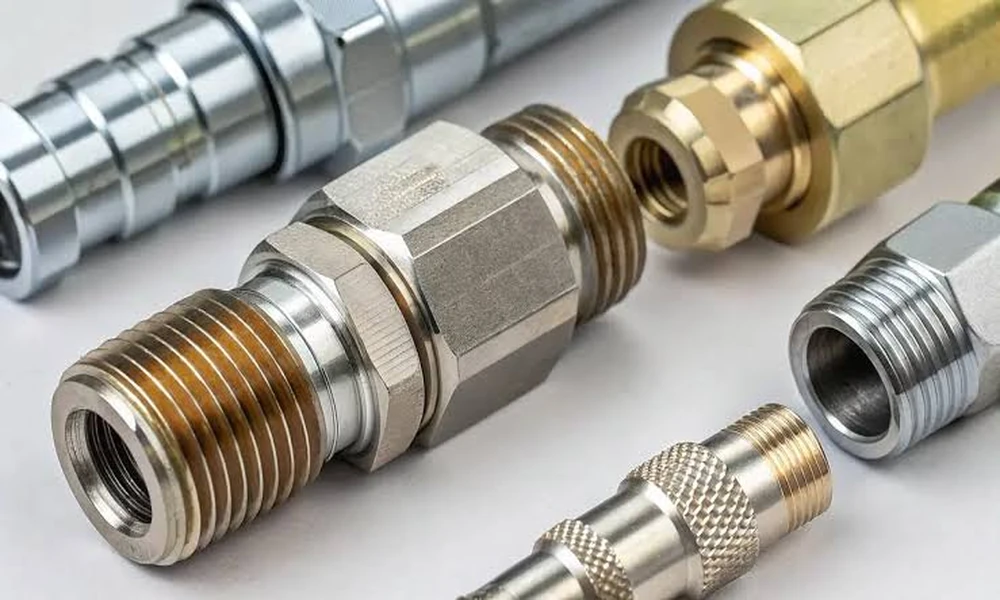
In industrial operations, choosing between off-the-shelf hardware and custom-machined parts can directly impact your equipment reliability and safety. While standard fittings work well for everyday tasks, harsher operating environments often demand precision engineering.
If you want to ensure your operations remain seamless, understanding when to invest in CNC turning Brisbane services can save your company from costly equipment failures and extended downtime.
The Case for Standard Industrial Fittings
Standard catalogue fittings, including common BSP, NPT, JIC, and Metric connectors, are mass-produced for general use. These work best if your project involves the following:
- Low-Stress Environments – Standard water lines, basic pneumatics, and low-pressure air systems rarely require specialised geometry.
- Tight Upfront Budgets – The per-unit price stays very low because manufacturers produce standard fittings in massive batches.
- Immediate Availability – If a standard part breaks, you can usually pick up a replacement from a local hardware supplier the same day.
However, standard fittings typically have limits. Engineers often resort to stacking multiple adapters together if a setup requires unusual angles, mixed thread types, or cramped clearances. As a result, every extra joint added creates another potential leak point.
When to Choose Brisbane CNC Turning Services
Industries like mining, marine, heavy transport, and manufacturing push machinery to its absolute limits. In these highly demanding sectors, local CNC turning delivers tailored rotational parts built to exact specifications.
Consider partnering with a Brisbane CNC machine shop when facing the following scenarios:
- Eliminating Multi-Adapter Setup – The greatest advantage of custom industrial fittings in Australia is the elimination of multiple adapters. Custom CNC lathes can machine hybrid thread transitions (like Metric to NPT) into a single, solid component. Removing extra joints dramatically reduces vibration loosening and fluid leaks.
- Extreme Corrosion, Heat, or Pressure – Catalogue fittings typically come in basic brass, carbon steel, or standard stainless. A custom shop can turn fittings from 316L marine-grade stainless steel, duplex alloys, titanium, or high-performance plastics to survive harsh chemicals and salt spray.
- Tight Space Constraints – Compact machinery housings often leave zero room for bulky standard elbows. Meanwhile, custom-turned fittings can match precise spatial footprints.
- Urgent Breakdowns and Obsolete Parts – Waiting weeks for an overseas OEM part halts production and drains profits. Local Brisbane machinists can reverse-engineer a worn fitting on-site and turn a precision replacement in days.
- Strict Tolerance and Quality Demands – High-pressure hydraulic systems require tight dimensional accuracy that mass-market hardware cannot always guarantee.
Make the Right Investment for Your Operation at RAHI Engineering
To decide between standard and custom fittings, look beyond the initial purchase price and evaluate the total cost of failure.
If a minor leak takes five minutes to fix on a low-pressure line, stick with standard catalogue parts. On the other hand, if a fitting failure risks worker safety, environmental spills, or hours of lost production, custom components pay for themselves quickly.
At RAHI Engineering, we can produce custom-turned fittings designed precisely to your needs. Combining attention to detail and technical expertise, we can supply your operations with high-quality, reliable parts that can uphold excellence and performance.
Reach out to our team to request a quote today.