

The single most useful thing a buyer can do before approaching any supplier is write down four numbers about their product, viscosity at working temperature, whether it foams, whether it contains particulates, and how aggressive it is chemically. Almost every specification decision for an automatic liquid filling machine singapore manufacturers install follows from those, and quotations obtained without them are guesses that get revised after delivery.
Gravity and Flow Meter Filling
For thin, free-flowing liquids such as water-based products, solvents and light oils, gravity filling from an overhead tank is simple, inexpensive and reliable, with fill quantity controlled by time or by level. Flow-meter filling measures the volume passing through a meter and closes the valve at target, which is more accurate and adapts easily between container sizes without mechanical change. Both suit low-viscosity products and neither copes well with anything thick.
Piston and Positive Displacement
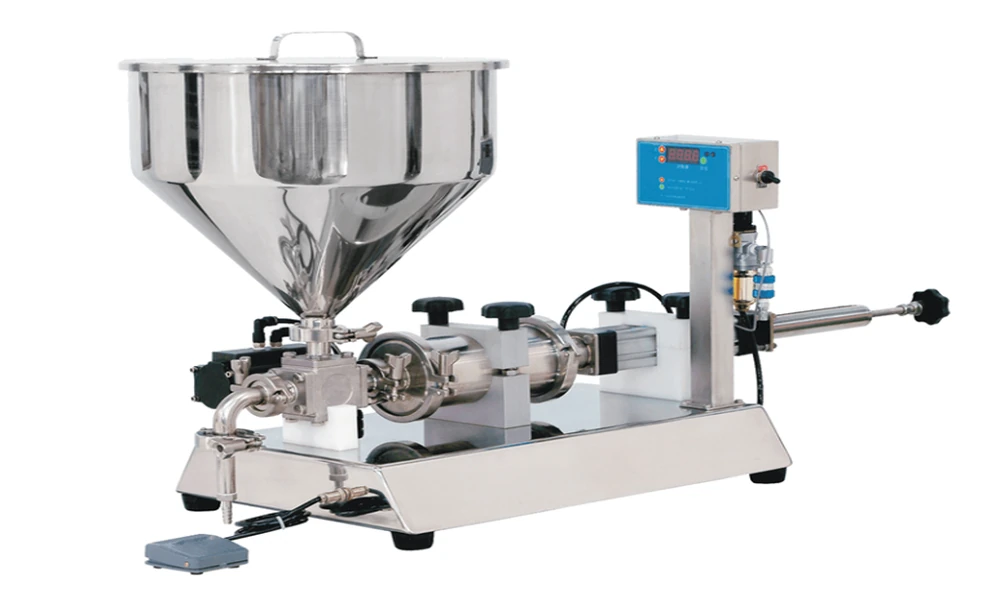
Viscous products such as lubricants, greases, resins, adhesives, sauces and creams need to be pushed rather than allowed to flow. Piston fillers draw a measured volume into a cylinder and dispense it, giving high accuracy and handling thick products and some particulates well. Lobe and gear pump systems suit continuous high-viscosity filling. Both require more cleaning attention than a gravity system, and the wetted path design determines how easily that is done.
Filling by Weight
Rather than measuring what is dispensed, weigh filling places the container on a load cell and fills to a target mass. This compensates automatically for density variation with temperature and between batches, which is exactly where volumetric systems drift. Where product is sold by weight, or where the value per litre is high enough that giveaway matters, weigh filling is usually the more defensible choice, and it produces a record for each container that supports traceability requirements.
Foaming Changes the Design
A product that foams cannot be filled from above at speed, because the foam rises, obscures the level and produces inconsistent fills. The solution is a diving nozzle that descends to the base of the container and fills beneath the rising surface, withdrawing as the level climbs. Fill rate is also managed, often with a fast bulk fill followed by a slower final approach. If your product foams at all, say so at the enquiry stage, because retrofitting this behaviour is difficult.
Materials and Chemical Compatibility
Every wetted component has to tolerate the product for years. Stainless steel grades differ in their resistance to chlorides and acids, and seal and gasket materials are frequently the limiting factor rather than the metal. Solvent-based products, strong acids and alkalis, and anything containing chlorides all narrow the options considerably. Provide a safety data sheet to any prospective supplier rather than a product name, since that is the document containing what they actually need.
Container Handling Around the Filler
The machine fills; something else has to present the container. Bottles, jerry cans and pails must arrive upright, singulated and correctly positioned, which involves conveyors, guide rails, stop gates and often a denester or unscrambler. Downstream, capping, induction sealing, labelling and palletising follow. Buyers frequently specify a fast filler and leave the handling manual, which simply relocates the bottleneck. Suppliers of liquid filling equipment should be quoting the handling as part of the solution.
Particulates and Products That Separate
Two product behaviours defeat otherwise well-chosen equipment. Suspended solids, whether pieces in a sauce or fillers in a coating, will not pass through a fine flow meter and need a filling path with adequate clearance, which usually points toward a piston system with generous valve sizing. Products that settle or separate on standing need agitation in the supply tank and sometimes recirculation through the filling line itself, since the first containers of a run and the last should not have measurably different contents. Mention both at the enquiry stage, because each changes the machine rather than the settings.
Speed, Heads and Realistic Throughput
Nominal speed figures assume ideal conditions and continuous running. Real throughput is nominal speed multiplied by uptime, minus changeovers, cleaning and the stoppages caused by whatever is upstream or downstream. Multi-head systems fill several containers simultaneously and cost proportionately more. Size the machine against your actual daily and weekly demand rather than a peak hour, and ask the supplier to state throughput assumptions explicitly rather than quoting a headline rate.
Cleaning and Changeover
Anything running more than one product needs a cleaning regime, and how the machine supports it determines usable capacity. Ask whether the wetted path can be flushed in place or must be dismantled, how long a full product changeover takes, whether tool-free disassembly is possible, and whether container size changes are recipe-driven or mechanical. For an operation with many SKUs in short runs, this specification frequently matters more than filling speed.
Safety, Compliance and Support
Where flammable solvents are handled, area classification governs what equipment is permissible, and static control through bonding and earthing becomes essential rather than advisory. Guarding, interlocks and emergency stops are baseline requirements. Beyond compliance, ask where spares are held, what breakdown response time applies, whether technicians are locally based and what training is included. Assessed against product characteristics first, handling second and support third, choosing an automatic liquid filling machine singapore operations rely on becomes a methodical exercise rather than a comparison of headline speeds.