

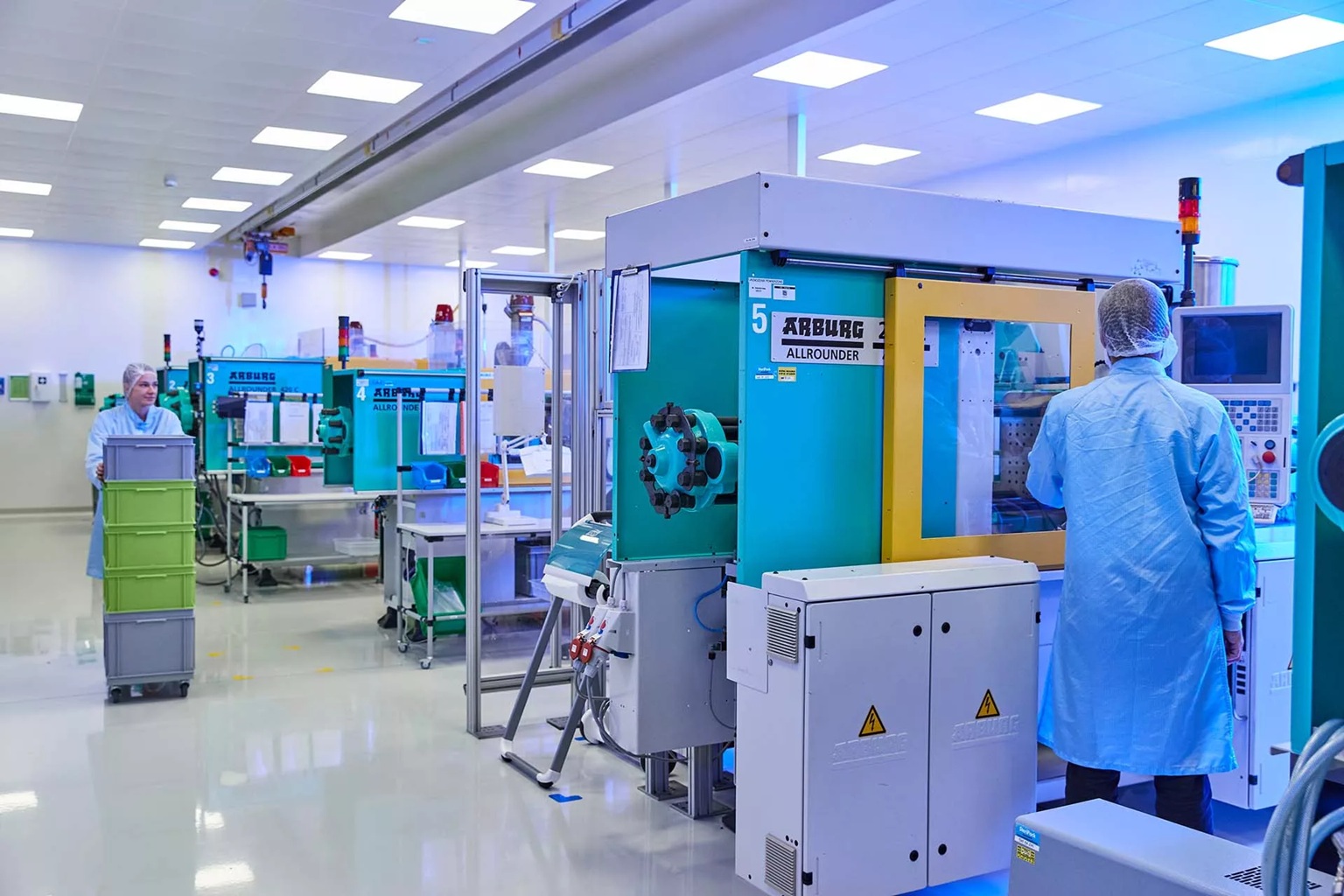
A medical contract manufacturer represents the invisible architecture supporting modern medicine’s most tangible interventions. Consider the cardiac stent opening a narrowed artery, the insulin pump delivering precise doses, the diagnostic device detecting disease at its earliest whisper. Each embodies not merely engineering ingenuity but a manufacturing story, a narrative of precision and scale that rarely enters the clinical encounter yet determines whether innovation reaches the patient at all. This transformation from prototype to production represents perhaps the most critical translation in modern medical technology.
The Manufacturing Imperative in Medicine
Medicine has always depended upon tools. From the first surgical instruments to contemporary implantable devices, the history of healing intertwines with the history of making. What has changed is the complexity of what we make and the precision it demands. A pacemaker contains more computational power than early spacecraft. An artificial hip must withstand mechanical stresses exceeding those on bridge supports, yet fit within the human body’s constrained geometries.
Medical contract manufacturer addresses a peculiar tension in medical innovation. Device companies excel at understanding clinical problems and envisioning solutions. Yet manufacturing at the scale and quality modern medicine demands requires different expertise. It requires knowledge accumulated across multiple projects and processes, capital investments that individual companies cannot justify, and a manufacturing science distinct from product science.
The Singapore Model
Singapore’s healthcare contract manufacturing market offers illuminating insight into manufacturing excellence. Projections indicate growth to USD 1,832.8 million by 2030, representing 7.4 per cent compound annual growth. Medical devices constitute the fastest-growing segment. The medical device outsourcing market, where contract manufacturing commanded 54.74 per cent revenue share in 2022, projects expansion to USD 857.1 million by 2030 at 13.6 per cent growth.
These numbers reflect a nation positioning itself at a critical juncture in the global medical technology supply chain. Singapore offers what innovators require: intellectual property protections, quality infrastructure supporting ISO 13485 certification, and a demographic profile creating sustained demand. By 2030, one in four Singaporeans will exceed 65 years, the highest proportion among ASEAN nations. The medical device market, valued at USD 3.5 billion in 2022, with over eighty per cent satisfied through imports and government hospitals consuming seventy-five per cent, demonstrates both opportunity and infrastructure.
The End-to-End Partnership
What distinguishes contemporary Medical contract manufacturer relationships is their comprehensive nature. These partnerships span the entire device lifecycle:
• Design refinement for manufacturability
The transition from prototype to production often reveals design elements incompatible with scaled manufacturing. A medical contract manufacturer brings manufacturing science into the design phase, identifying potential production challenges before they become crises, suggesting modifications that preserve clinical functionality whilst enabling reliable production.
• Process development and validation
Medical devices require validated manufacturing processes demonstrating consistent output. This validation, encompassing installation qualification, operational qualification, and performance qualification, transforms experimental procedures into reproducible manufacturing protocols, documented and defendable before regulatory scrutiny.
• Quality system integration
Quality in medical device manufacturing represents not merely inspection but systematic prevention. Comprehensive quality management systems, tracking materials from suppliers through finished devices, enable both ongoing process control and rapid response when issues emerge.
• Regulatory navigation support
Manufacturing documentation for medical devices must satisfy requirements varying across jurisdictions. A medical contract manufacturer experienced across multiple regulatory frameworks provides expertise accelerating approvals whilst ensuring compliance, translating between engineering specifications and regulatory expectations.
• Supply chain orchestration
Medical device production depends upon materials sourced globally, sterilisation services, packaging components, and distribution logistics. Coordinating these elements whilst maintaining traceability and quality control requires sophisticated systems that individual device companies, particularly smaller ones, struggle to establish independently.
The Human Dimension
Behind these systems exist people. Engineers solving manufacturing puzzles. Quality specialists tracing anomalies through production batches. Regulatory professionals crafting submissions in multiple languages. This human expertise, accumulated over years and projects, represents perhaps the most valuable asset a medical contract manufacturer offers.
I recall visiting a manufacturing facility, watching technicians assembling diagnostic device components. Each movement was precise, documented, reproducible. Yet what struck me was their awareness of the device’s clinical purpose, their understanding that manufacturing precision determines whether disease will be detected early enough for treatment. That connection between manufacturing and clinical outcome exemplifies excellent medical manufacturing.
The Future of Medical Manufacturing
As medical technology grows more sophisticated, as devices become smaller and smarter, manufacturing complexity increases correspondingly. The devices we envision for future medicine will demand manufacturing capabilities exceeding what exists today. This evolution suggests that medical contract manufacturer relationships will become not merely convenient but essential for innovation.
Singapore’s trajectory indicates manufacturing capacity following demographic need. Ageing populations require more medical interventions, creating sustained device demand, which justifies infrastructure investments, which enables previously unfeasible innovation. This feedback loop between clinical need and manufacturing capability accelerates medical progress.
Conclusion
The medical devices transforming contemporary clinical practice do not emerge spontaneously. They result from partnerships between those who envision medical solutions and those who make them reality at scale. The medical contract manufacturer, operating largely invisible to the clinical encounter, provides essential infrastructure translating innovation into intervention, ensuring devices reach patients reliably, safely, and in quantities meeting medical need. As medicine grows more technologically sophisticated, as populations age, as healthcare systems seek better outcomes through better tools, manufacturing partnerships become increasingly central to medical progress. Understanding this manufacturing story recognises that healing depends not only upon clinical insight but upon the systems ensuring our most sophisticated medical instruments reach those who need them, produced with the precision and reliability that patient safety demands. This is the promise and essential contribution of the Medical contract manufacturer.