

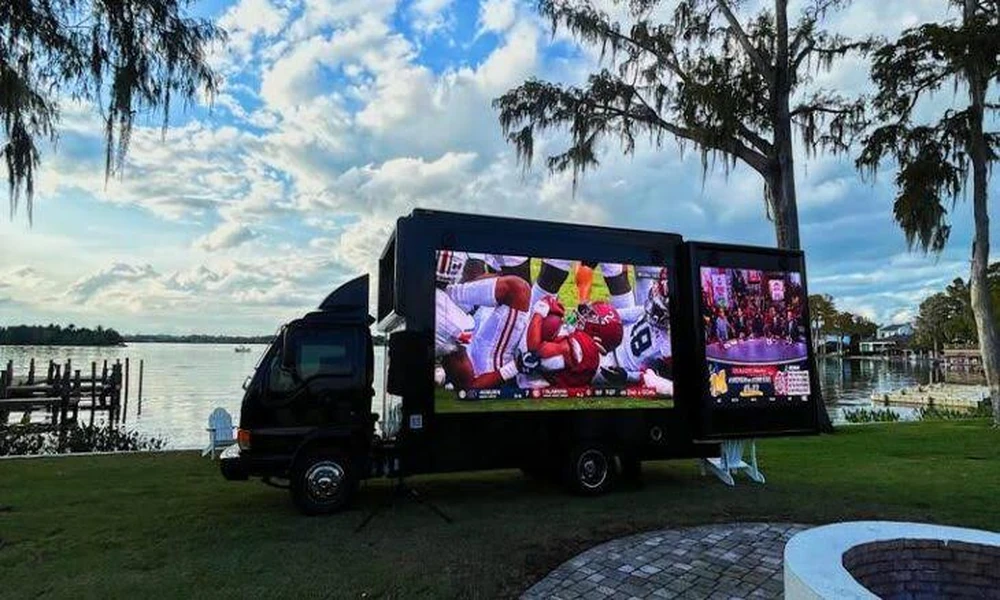
Mobile outdoor LED ads and social media campaigns work well together because each one reaches a person during a completely different part of their day. Social platforms depend on someone actively holding a phone and scrolling, which leaves large stretches of daily movement, commuting, walking through a district, and sitting in traffic entirely outside their reach. Mobile outdoor LED ads step directly into those stretches, placing brand messaging in physical spaces while a parallel campaign continues running online. A mobile billboard truck carries this physical presence through streets and districts, giving a brand two separate points of contact within the same day instead of relying on a single channel to carry the full weight of a campaign.
Feed downtime coverage
Feed downtime makes up a larger share of the day than most campaign planning accounts for. Nobody scrolls constantly, and there are stretches, commuting, waiting in line, sitting through a meal, where a phone stays in a pocket, and a social feed goes untouched entirely. Mobile outdoor LED ads exist precisely in those gaps, reaching people during the exact hours a digital campaign goes quiet without anyone actively deciding to disengage. Feed downtime isn’t a failure of a social strategy; it’s simply the shape of an average day. This isn’t about competing with social media at all. It’s about covering the hours social media structurally cannot, since even the most engaged user still spends most of their waking hours looking at something other than a screen, whether that’s a street, a storefront, or the back of someone’s head on a crowded train.
Street-level recall
Street-level recall works differently from a digital impression, and that difference is exactly what makes it useful alongside a social push. People return to their phones after reading a billboard and scroll, but they do not click on it before returning to their phones again. A mobile outdoor LED advertisement is seldom used to convert directly, but rather can be used to seed recognition that accumulates later as a search, a follow, or a tap on an otherwise ignored ad. Street-level recall compounds when it’s reinforced. Brands running both formats together sometimes notice a lift in social engagement, specifically in areas where a mobile unit has been running, since a name seen twice, once on a truck and once on a feed, tends to register more firmly than either exposure would on its own.
District overlap targeting
District overlap targeting closes a gap that social platforms can’t close alone. Social platforms let a brand target by location, but that targeting still depends entirely on someone opening the app in the first place, which isn’t guaranteed, no matter how tight the targeting radius gets. Mobile outdoor LED ads reach that same local audience without needing an app open at all, covering neighbourhoods and districts where a social campaign is already running, so the two formats reinforce identical geography from two different directions. District overlap targeting matters most for time-sensitive campaigns, where a brand needs a local audience aware of something within days rather than weeks, and there isn’t time to wait for organic reach to build.
Mobile outdoor LED ads and social media campaigns aren’t competing for the same attention; they’re covering different hours and different moments within the same person’s day. One format catches people mid-scroll, the other catches them everywhere else, and running both together closes a gap that either one left open on its own.